

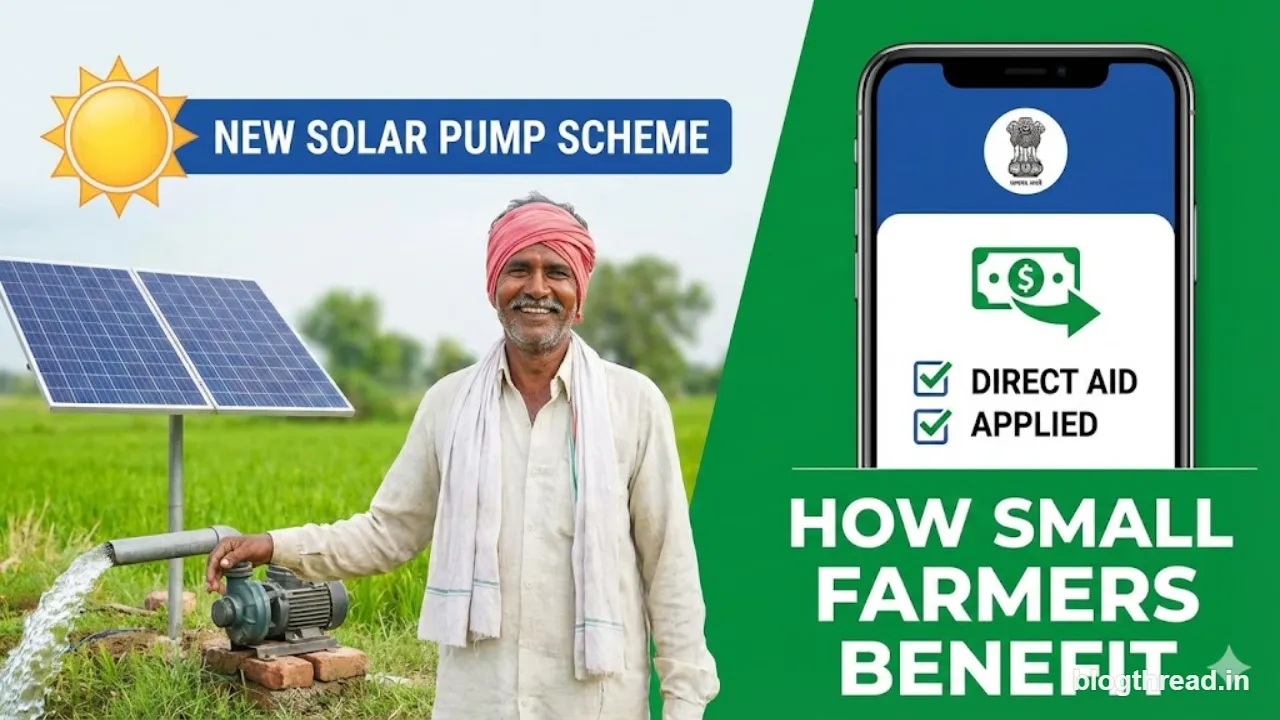
Why this solar pump push matters now
For small and marginal farmers, irrigation cost is often the difference between a profitable and a loss-making season. A grid-free solar pump cuts recurring diesel bills, stabilises watering schedules, and reduces the risk of crop stress during power outages—directly improving yield and net margin.
The new solar pump scheme focuses on quicker approvals, higher subsidy coverage for small holders, and flexible capacities matched to land size. With direct benefit transfer (DBT) and standardised vendor panels, the on-ground process is designed to be simpler than earlier rounds.
What’s on offer: subsidy, capacity, and models
- Subsidy coverage: For small and marginal farmers, total support can cover a large portion of the benchmark cost; general category farmers get a substantial share as well, with the balance paid by the farmer or via bank loan.
- Pump capacities: Common options include 2 HP, 3 HP, 5 HP and 7.5 HP, in both surface and submersible types; capacity is chosen as per water table, discharge need, and landholding.
- Off-grid and grid-connected: Off-grid pumps serve areas with poor supply; grid-connected systems can export surplus power where local policy permits, creating an additional income stream.
Who is eligible
- Small/marginal farmers: Priority for cultivators with smaller landholdings; tenant farmers may apply with valid lease/consent documents where state rules allow.
- Water user groups/FPOs/SHGs: Community irrigation models can apply for shared pumps, especially in canal tail-end or power-deficit pockets.
- Non-irrigated or diesel-dependent fields: Preference in districts with low irrigation coverage or heavy diesel pump usage to reduce fuel burden.
Documents you should keep ready
- KYC & bank: Aadhaar, PAN (if available), bank passbook, IFSC; ensure Aadhaar-seeded account for DBT.
- Land record: Khatauni/RTC/7-12 extract or equivalent; for tenants, registered lease/consent letters per state norms.
- Site details: Plot coordinates, water source depth estimate, existing pump details (if any), and a simple site sketch.
- Photo & contact: Recent passport photo, active mobile number for OTP/eKYC and status alerts.
How to apply: step-by-step
- Online registration: Sign up on the notified state/central solar pump portal. Complete eKYC and basic farm profile.
- Capacity selection: Choose pump HP/type based on recommendation—many portals offer sizing guidance using land size, crop type, and water table inputs.
- Vendor and quote: Pick an empanelled vendor; upload proforma invoice. Ensure it includes module wattage, pump specs, controller, and warranty terms.
- Discom/department approval: Technical feasibility is checked; you may get a site visit call. Keep land and water source accessible for inspection.
- Sanction & payment: On sanction, pay your beneficiary share or arrange bank loan; DBT share is tied to installation and inspection milestones.
- Installation & commissioning: Vendor installs modules, structure, controller, and pump; demand a demo on priming, cleaning, and seasonal care.
- Final verification & DBT: After commissioning, the authority verifies and releases subsidy directly to vendor/farmer as per scheme design.
Costs, savings, and payback
Upfront cost varies by HP, depth, and structure quality, but the subsidy reduces your outlay sharply. Replacing a diesel pump can save monthly fuel expenses, often turning payback into a few crop cycles instead of years, especially with multi-cropping or high-value horticulture.
Add drip/sprinkler to stretch every litre. Lower operating cost plus better water control can lift yields and reduce crop stress during heat spells, stabilising your seasonal income.
Smart selection tips for small farmers
- Don’t oversize: A right-sized pump runs efficiently and costs less; focus on discharge and head, not just HP.
- Prioritise quality: Galvanised structures, Tier-1 modules, MPPT controllers, and surge/lightning protection improve uptime and lifespan.
- Match with micro-irrigation: Drip or sprinkler can cut water draw and let a smaller pump serve more acres reliably.
- Plan module cleaning: Dust kills output. Schedule fortnightly cleaning; in dry belts, weekly during peak season.
- Keep spares: Fuses, connectors, and a basic toolkit reduce downtime during peak irrigation windows.
Warranty, service, and uptime
- Standard coverage: Modules often carry 25-year performance warranty; pumps/controllers vary by vendor (commonly 2–5 years). Confirm onsite service terms.
- Helpline & AMC: Use official helplines for ticketing. An annual maintenance contract can be value-for-money in remote locations.
- Theft/weather protection: Fence or elevate arrays if cattle movement is high; insure against storm damage where feasible.
Bank loan and subsidy flow
- Credit route: If paying farmer share via loan, ask for agri-priority terms and check repayment aligned with harvest cycles.
- DBT release: Subsidy typically goes to vendor post-verification, reducing your financed amount. Track milestone updates on the portal/SMS.
- Avoid middlemen: Apply only via official portals or designated centres. Keep all receipts and sanctioned cost sheets.
State-specific points to note
- Benchmark costs differ: States publish benchmark rates by HP/category; subsidy is computed on these, not on inflated quotes.
- DISCOM norms: Grid-connected export (if offered) needs metering and a simple agreement; check feeder capacity and net metering rules.
- Water-use compliance: In over-exploited blocks, surface-water or micro-irrigation pairing may be mandatory—confirm local guidelines.
Farmer checklist before final payment
- PDI (pre-delivery inspection): Verify module brand/wattage, pump make/model, controller rating, cables, earthing, and structure thickness.
- Demo & logs: Take a live run; note discharge at your depth. Maintain a small log of sunshine hours, cleaning dates, and any faults.
- Documents: Keep work order, warranty cards, commissioning report, and final invoice copies safely for future claims.
Bottom line: make it pay for itself
Choose the right HP with drip, clean panels regularly, and lock in a responsive vendor. The subsidy softens the initial hit, while diesel-free irrigation and steadier watering boost both yield and peace of mind—turning your pump into a profit tool, not a worry.
| Step | What to do |
|---|---|
| Eligibility | Confirm small/marginal status or group eligibility; keep land/lease papers ready |
| Application | Register on official portal, complete eKYC, select capacity and vendor |
| Sanction | Get site checked; arrange farmer share or loan post-approval |
| Installation | Insist on quality parts, proper earthing, and demo at working depth |
| DBT | Track verification and subsidy release; store all documents and invoices |
0 Comments
No comments yet. Be the first to share your thoughts!