

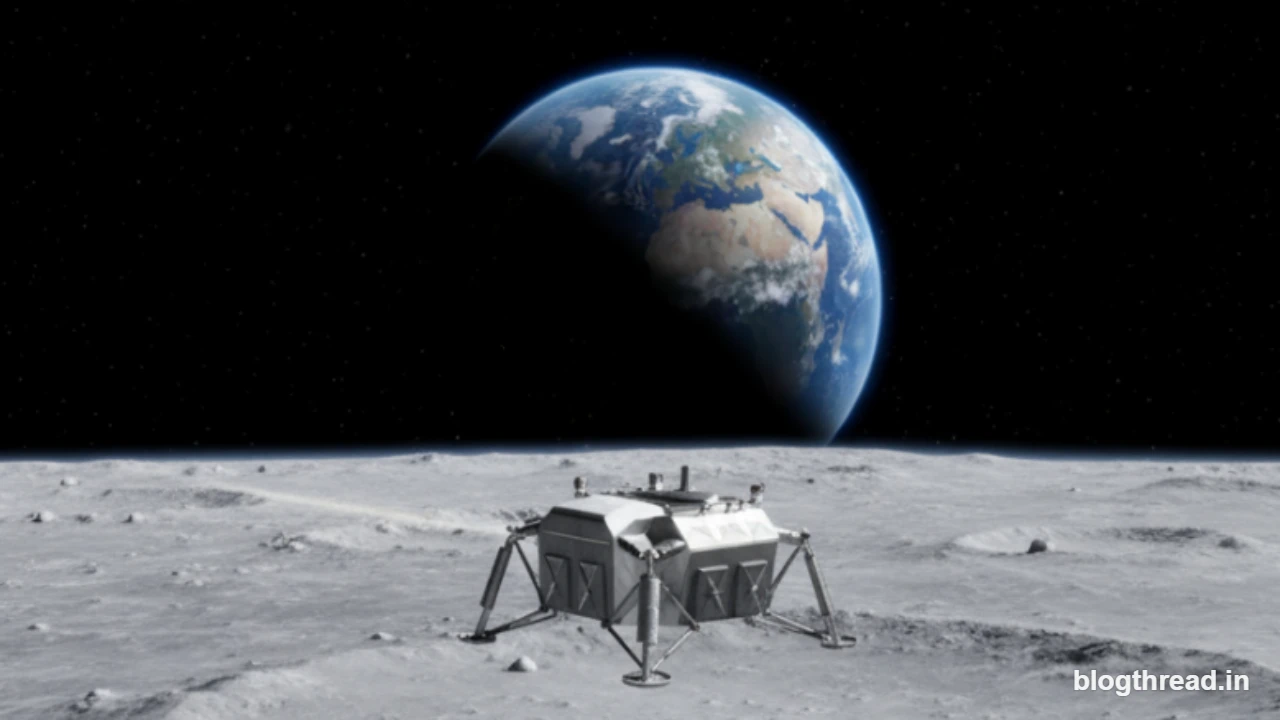
Why Chandrayaan‑4 matters now
After Chandrayaan‑3’s soft‑landing milestone, India’s next big lunar leap is taking shape: Chandrayaan‑4, a 2026 mission targeting the Moon’s south pole region with a stronger science payload, robust landing systems, and a push toward bringing lunar samples home. For students, space buffs, and industry alike, this is India doubling down on precision, science, and staying power in deep space.
The south pole prize
The lunar south pole is a scientific goldmine: permanently shadowed craters can lock water‑ice and volatiles, while nearby ridges get near‑continuous sunlight for power. For India, probing these extremes builds on Chandrayaan‑1’s landmark water signature findings and Chandrayaan‑3’s surface science—taking the next step from ‘can we land and operate?’ to ‘can we characterize, cache, and one day return samples?’
What’s likely on board
- Precision landing suite: upgraded hazard detection, camera fusion, and autonomous guidance to handle tricky slopes and boulder fields.
- Thermal‑survivability tweaks: better insulation and power management to push beyond single‑lunar‑day operations where feasible.
- Next‑gen instruments: ground‑penetrating radar, spectrometers for volatiles and minerals, seismo/thermal probes, and improved drill/scoop systems for regolith handling.
Mission architecture at a glance
While final stacks evolve closer to launch, expect a modular approach familiar to Chandrayaan‑3—orbiter support, a Vikram‑class lander redesign, and a Pragyan‑style rover with beefier wheels, suspension, and traction logic. A dedicated communications relay (either in‑stack or leveraged via partner assets) would derisk low‑elevation links at polar latitudes.
| Segment | Focus |
|---|---|
| Orbiter/Module | High‑res mapping, relay support, science context for landing zone |
| Lander | Autonomous hazard avoidance, soft‑landing robustness, thermal endurance |
| Rover | Short‑range traverse, in‑situ mineralogy, volatile sniffing, regolith work |
| Comms | High‑reliability links in low‑sun‑angle, shadowed terrain |
Sample‑return ambition
India’s near‑term lunar arc increasingly nods toward sample return. Even if Chandrayaan‑4 doesn’t execute a full Earth‑return, testing the pieces—sampling tools, caching, ascent interface studies, and rendezvous protocols—can stage a credible path to a future India‑led or partnered sample‑return effort.
What’s different from Chandrayaan‑3
- Harder terrain: the south pole is tougher—steeper slopes, low sun angles, more shadows—demanding higher landing autonomy.
- Science depth: from basic surface validation to targeted sub‑surface and volatile investigations linked to ISRU (in‑situ resource utilization) questions.
- Systems maturity: iterative fixes from CH‑3 telemetry—navigation margins, leg shock absorption, power/thermal budgeting, and dust mitigation.
Why 2026 is realistic
ISRO’s step‑by‑step approach—the hallmark of Mars Orbiter, Chandrayaan‑2/3, and the ongoing human‑spaceflight build‑up—favors a 2026 window for a qualified stack and integrated testing. Vendor ecosystems for sensors, avionics, and composites have matured, while mission ops teams have fresh, relevant experience from recent lunar surface ops.
Industry and academia: the multiplier
Expect wider participation from Indian startups and universities in sensors, AI/vision, materials, and data pipelines. This de‑risks single‑point failures, accelerates innovation, and opens career avenues for engineers and scientists—across payload design, simulation, operations, and downstream analytics.
What students can track
- Payload announcements: spectrometers, thermal probes, radar—what flies tells you the science story.
- Test milestones: drop tests, hover‑hops, thermal‑vacuum trials—keys to confidence in landing and survival.
- Data portals: open imagery and instrument datasets—great for projects in geology, ML vision, and mapping.
Risks and how ISRO can hedge
- Lighting/shadows: smart trajectory design and terrain‑relative navigation to avoid deep shadows at touchdown.
- Thermal extremes: phase‑change materials, heaters, and selective hibernation strategies to stretch life.
- Comms gaps: relay support and fault‑tolerant protocols to maintain command and telemetry in rugged topography.
The bigger picture: India’s space arc
Chandrayaan‑4 sits alongside Gaganyaan (crewed flight tests), Aditya‑L1 operations, and upcoming Venus/Exoworlds science—signaling a balanced portfolio across exploration, science, and human spaceflight. The lunar south pole is not just prestige; it’s a proving ground for technologies that feed into future resource utilization, long‑duration robotics, and, eventually, human‑tended outposts.
Bottom line
If Chandrayaan‑3 was India’s ‘we can land and work’ chapter, Chandrayaan‑4 aims to be ‘we can push science deeper and prepare to bring pieces back’. A 2026 south‑pole shot, with smarter autonomy and richer instruments, would keep India firmly in the front rank of 21st‑century lunar exploration.


0 Comments
No comments yet. Be the first to share your thoughts!